
Geodata for Urban Planning: Demographics, Mobility, and Retail
With demographic, mobility, and retail data, WIGeoGIS provides geodata that enriches existing urban planning data. This gives cities, municipalities, and urban planners even deeper insights into population, mobility, and regional trade – for well-founded, sustainable decisions in urban and regional development.
An Overview of the Key Points
With socio-demographic, retail, and mobility data from WIGeoGIS, cities, municipalities, and public or public-sector organizations enrich their database: This makes planning even more efficient and detailed, and allows resources to be allocated more effectively than before. Whether urban development, infrastructure, retail, or local services: our geodata shows where unmet demand and potential exist.
Your Benefits at a Glance
- Efficient planning: direct investments strategically, avoid vacancies, and secure local services.
- Facts instead of gut feeling: all data is checked, up-to-date, and reliable.
- Easy to use: data is compatible with common GIS systems, planning software, and reports.
- Better communication: key performance indicators (KPIs) make decisions transparent.
- Promoting sustainability: data-driven management of urban development that is environmentally, socially, and economically sound.
Which data is relevant for urban and regional planning?
WIGeoGIS supports data-driven decision-making in urban and municipal planning with the following relevant data:
- Small-scale socio-demographic data: such as population, age, life stages, employment
- Purchasing power data: data on income levels and willingness to consume
- Data on retail & gastronomy: POI data, location factors for retail, gastronomy, services, business type, sales area, assortment
- Traffic data: traffic density, travel speed, commuter flows, origin-destination analysis
Discover valuable data for your urban and municipal planning
Three Types of Geodata Enhance Urban and Spatial Planning
Small-scale Sociodemographic Data
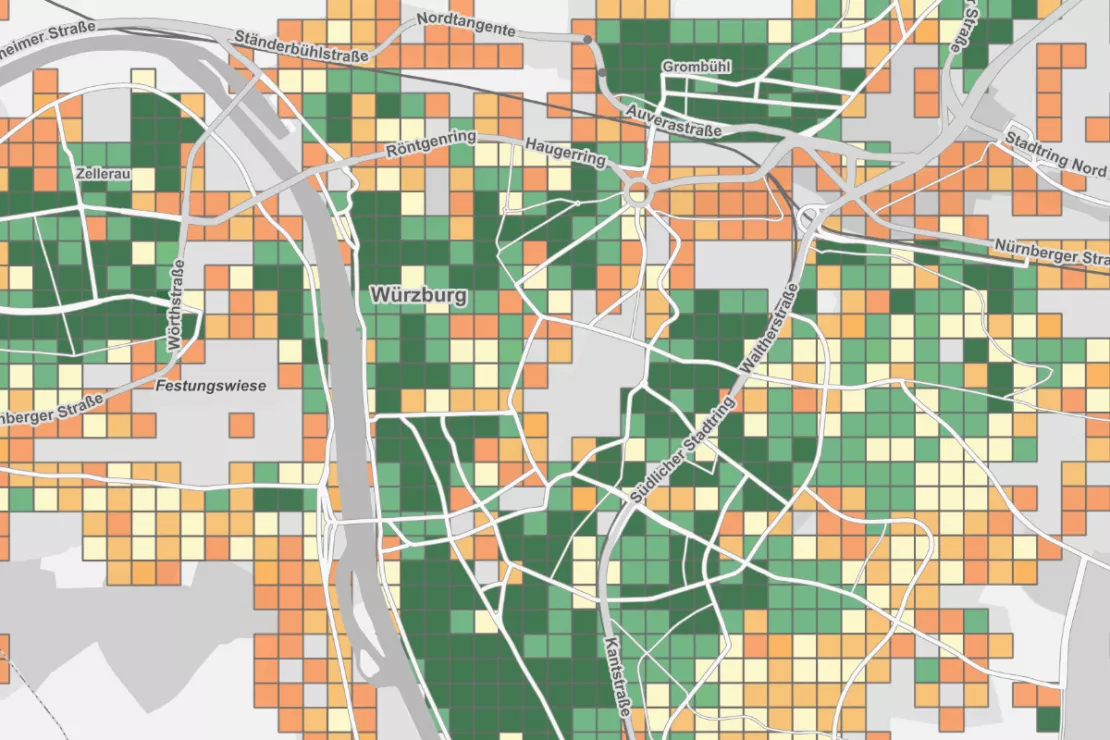
Small-scale sociodemographic data from WIGeoGIS is available at raster cells as small as 100 x 100 meters and provides more than 600 variables on population, buildings, and consumption patterns. This allows urban planners to efficiently manage infrastructure, housing, and services, and to obtain answers to questions like:
- How and where does the population structure (e.g., age groups, household types, income brackets) change in a region?
- What infrastructure will be needed in changing regions in the future?
Data on Retail & Hospitality
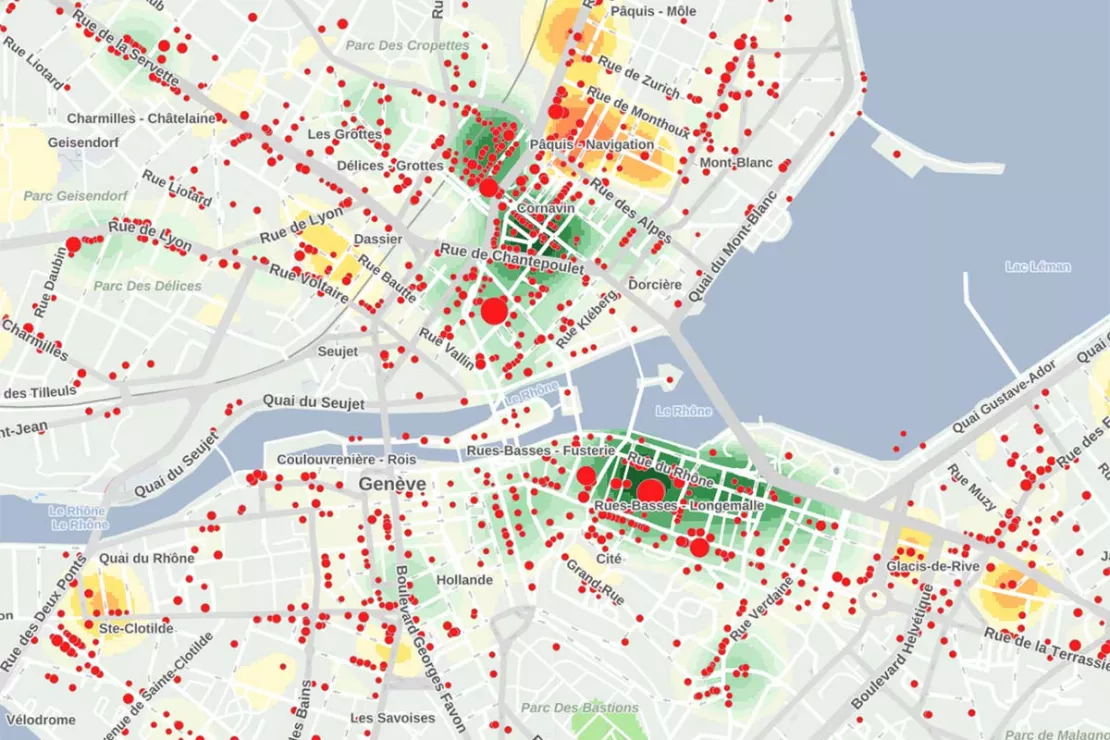
Using POI data on retail and gastronomy, and location factors from WIGeo Location Atlas, urban planners gain an overview of how accessible services are for the population. This allows them to strategically control which services should be located in specific neighborhoods or districts and to clarify questions like:
- Which neighborhoods have potential for new services?
- Where are public facilities, doctors, local shops, etc. lacking?
- Which locations are dominated by chain stores, and where are owner-operated retail stores predominant?
Traffic Data
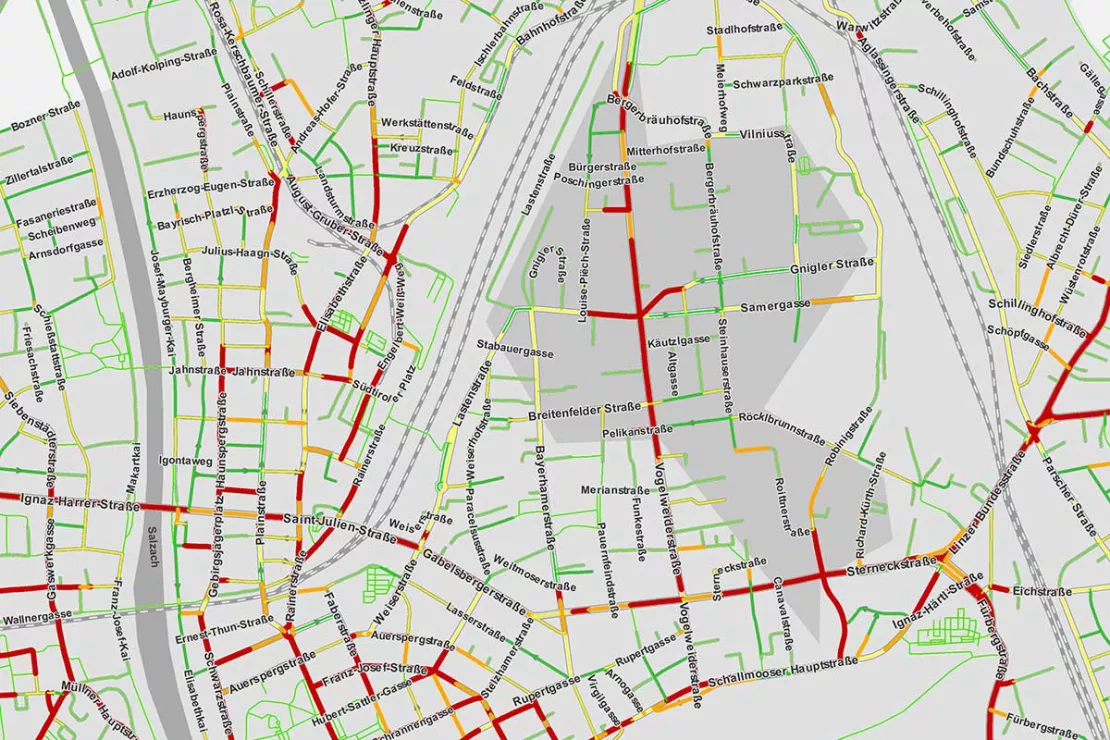
Traffic data offers valuable insights into mobility behavior, traffic flows, and commuter flows. Urban planners use this to strategically direct investments in mobility, accessibility, and infrastructure. As an official TomTom partner, WIGeoGIS offers its traffic data: worldwide, minute-by-minute, and at the street segment level!
- Where do people come from, where do they go – and at what times of day?
- Which roads are heavily congested, where are there bottlenecks?
- How accessible are neighborhoods by public transport or road?
Enrich Your Datasets with In-Depth Geo and Market Data
What are some practical examples of the use of small-scale socio-demographic data, traffic data, and trade data in urban planning?
Application example 1: How can vacant spaces in the city center be revitalized using data?
In many city and town centers, vacant shopfronts are increasingly common. In response, many communities are seeking to revitalize their town centers through an attractive retail mix, reducing the distance residents must travel to access everyday services.
Which steps make sense can be determined through detailed geodata analysis: The retail and gastronomy data in WIGeo Location Atlas reveal the structure of retail locations, highlight clusters such as those of chain stores, which routes are particularly busy, and where there are gaps. TomTom traffic data provides information on where visitors come from and which areas experience how much footfall at different times of day. Analyzing public transport and pedestrian accessibility reveals which streets function even without cars.
A city or municipality can use WIGeoGIS geodata to decide whether a vacant property would be better suited to a local grocery store, a restaurant, a co-working space, or a social facility. Thanks to these key performance indicators, decisions also become transparent for politicians and the public.
Application example 2: Where are kindergartens, schools, and local amenities needed in growing neighborhoods?
A neighborhood is growing, cranes are at work, young families are moving in. Soon new schools and daycare centers will be needed. The question is not just "How many seats are needed?", but above all: Where? The same applies to medical and health centers, grocery retailers, restaurants, and nursing homes.
To identify the best locations, planning offices use particularly small-scale and diverse socio-demographic data, with raster cells as small as 100 x 100 meters, such as age structure, household sizes, and accessibility by foot, bicycle, and public transport. Building data provides a sense of density and use, WIGeo Location Atlas categorizes the neighborhood structure, and TomTom data shows how everyday routes are distributed. This creates a realistic needs assessment.
As a result, for example, a handful of potential locations for a kindergarten emerge, with one located on a heavily travelled daily route, making it the preferred option. The location proposal serves decision-makers as a reliable data source thanks to up-to-date and detailed geodata.
WIGeoGIS Data Packages - further Information
Demographic Data You Need
The range of Demographics available is large and varied. We have an overview and will help you make the right selection. To make sure you get the best, and at the best price.

WIGeo Location Data - High-Quality POI Data for DACH
Discover the power of WIGeo Location Data – high-quality POI and location factors for retail, gastronomy, and service industries in Germany, Austria, and Switzerland. Make smarter location decisions.
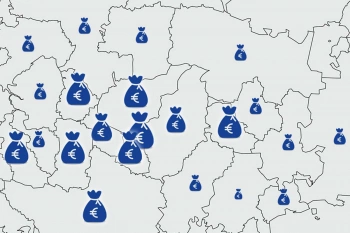
Purchasing Power Data for Germany, Austria, and Europe
We offer purchasing power data broken down by product category and age group, available at the ZIP code level and for smaller geographic areas.
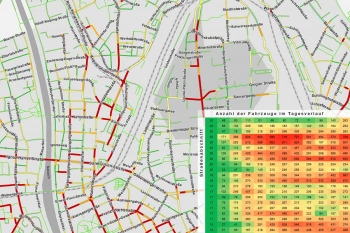
Traffic data for Mobility analysis & Traffic Planning
Use detailed traffic data from TomTom via WIGeoGIS for precise mobility analyses, traffic planning, and location analysis.
Demographic, mobility, and retail data: Test now free of charge and without obligation!
- Test data* on small-scale socio-demographics, mobility or retail
- Non-binding, free test
- Test ends automatically without cancellation
I will gladly support you, also by telephone.

* Information about the free test data: Selected test data is available for standard regions in Germany or Austria. For Germany, the data is for districts in Munich and the surrounding areas. For Austria, the data is for districts in Vienna and the surrounding areas. The products of WIGeoGIS are intended for companies and are not suitable for private use. If you need a one-time market analysis, we will gladly make you a service offer.
FAQ
-
How does WIGeoGIS geodata improve the planning of roads, public transport, and cycle paths?
WIGeoGIS geodata makes the transport needs of cities and municipalities more precisely visible and their transport planning more efficient. Traffic volumes and origin-destination analyses provide precise information about the current traffic situation: How heavily and at what times are transport routes used, and which routes are preferred? Furthermore, POI data from WIGeo Location Atlas, as well as small-scale socio-demographic data such as GEOmarkets or AZ Market Grids with data down to 100 x 100 meter grid cells, provide a particularly realistic representation of mobility behavior.
-
How do small-scale demographic data support data-driven planning for schools, daycare centers, hospitals, and green spaces?
Small-scale demographic data (such as that provided by GEOmarkets and Market Grids) form the basis for predictive demand planning. Highly detailed information on population structure (e.g., age structure, household sizes, and socioeconomic characteristics), broken down to grid cells as small as 100 x 100 meters, allows municipalities to better assess where future childcare places, school locations, or healthcare infrastructure will be needed. The planning of green spaces and open areas is also optimized using the small-scale data from WIGeoGIS.
-
What role do purchasing power and demographic data play in affordable housing, social justice, and sustainable urban development?
Purchasing power data and small-scale demographic information from WIGeoGIS provide very detailed insights into income, household structures, and population development in individual city districts. These findings are crucial for promoting affordable housing, using housing subsidies efficiently, and reducing social inequalities. This allows cities and municipalities to make informed decisions about where non-profit housing makes sense, where pre-emption rights on land should be used, where there are underserved areas, and which housing types best meet the needs.
-
How can geodata on retail structure strengthen the local economy, retail trade, and the establishment of new businesses?
Geodata analyses from WIGeoGIS – for example, on the degree of chain store penetration, supply density, and service level – show where supply gaps exist and which districts are economically underserved or overserved. This information helps cities reduce vacancies, revitalize city centers, and develop new usage concepts. Companies also benefit by using data to identify suitable locations for new branches or business models. You can find all of this in WIGeo Location Atlas.
-
How does WIGeo Location Atlas support cities and municipalities in location and service planning?
WIGeo Location Atlas provides geocoded Points of Interest (POI data) and location factors for Germany, Austria, and Switzerland. It shows where supply gaps or vacancies exist and how industries and supply levels are spatially distributed. This provides cities and municipalities with a data-based foundation for analyzing supply structures, planning new uses, and developing space efficiently.
-
How do interactive geodata maps promote citizen participation, transparency, and acceptance of municipal projects?
Interactive geodata maps create transparency and promote active citizen participation. They make complex planning visually comprehensible – from urban development and infrastructure projects to funding programs. This makes regional characteristics visible, planning processes more understandable, and decisions more widely accepted. This strengthens trust in municipal projects and facilitates dialogue between the administration and the public.
See how geodata, market data and retail data can support your city and municipal planning now!